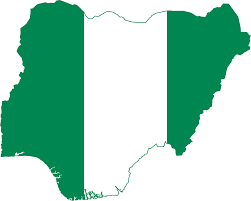
Between the “Naija no dey carry last” pride of their parents and the cultural codes of their birth countries, a unique generation is coming of age: the second-generation Nigerians. They are British, American, Canadian and Yoruba, Igbo, Hausa, Efik. Their experience of Nigeria is not lived daily but is inherited, curated, and often intensely sought after. Through their dual lens, they are quietly redefining what “home” means for the global Nigerian family, offering a fascinating glimpse into a more fluid, inclusive future.
For this generation, identity is not a given but a choice, actively constructed from fragments. It is learned in kitchens smelling of jollof rice and fried plantain, in the melodic cadence of parents’ pidgin on phone calls, and in the compulsory attendance at lengthy cultural ceremonies. It is also mediated through screens—Nollywood films, Afrobeats videos, and the curated, often chaotic, narratives of Nigerian social media. This “Nigeria” is both intimately familiar and strangely distant, a source of immense cultural pride and occasional bewilderment. They champion Burna Boy and Tiwa Savage with a fervor that rivals fans in Lagos, yet may grapple with the nuances of kinship obligations or the complex politics back “home.”
This position as cultural translators is their profound strength. They navigate the expectations of their Nigerian heritage with the individualism of their Western upbringing, often challenging traditions while seeking to understand them. They ask “why?” more readily, pushing conversations on gender roles, governance, and social issues in directions that can be uncomfortable but are ultimately necessary for progress. In their professional lives, they are natural bridges, bringing a global mindset to Nigerian ventures and an authentic Nigerian sensibility to international spaces.
Importantly, their concept of “home” is expanding. For many, it is not a binary (Nigeria vs. Abroad) but a spectrum. “Home” might be the family house in Benin City, their flat in London, the online Nigerian community they engage with, and the annual Detty December pilgrimage to Lagos—all at once. This multifaceted belonging allows them to engage with Nigeria on their own terms, free from the weight of direct survival but deeply invested in its cultural prosperity.
As this generation steps into its influence, Nigeria has a tremendous opportunity. They are not “lost” to the diaspora; they are its new vanguard. By creating inclusive pathways for their engagement—through cultural exchange programs, investment vehicles tailored to their perspective, and digital platforms for contribution—Nigeria can harness this dual-lens vision. In their redefined “home,” we see not a dilution of Nigerian identity, but its exciting, global evolution.