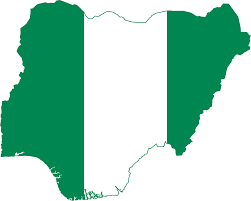
Abuja, Nigeria – January, 2026 – For decades, Nigerians have debated what is wrong with their country. We blame colonial history, foreign interference, global inequality, and sometimes even destiny. While these factors may explain parts of our story, they do not explain our present condition in full.
The uncomfortable truth is this: many of Nigeria’s gravest enemies are internal. They are not distant forces. They are attitudes, systems, and decisions that Nigerians have either enabled, excused, or refused to confront honestly.
If Nigeria is to make progress, this conversation must be had—not emotionally, not ethnically, not religiously—but truthfully.
Corruption in Nigeria is no longer merely a crime; it has become a culture.
From the corridors of power to everyday interactions, corruption thrives because it is widely tolerated. At the top, it appears as misappropriated public funds, abandoned projects, inflated contracts, and budgetary fraud. At the grassroots, it takes the form of bribery, extortion, and deliberate inefficiency.
What is most troubling is not that corruption exists, but that it is often defended:
“Everyone does it.”
“That is how the system works.”
“If you don’t take it, someone else will.”
A society that rationalises corruption cannot defeat it.
The High Cadre: Yes, the minister who embezzles funds meant for hospitals is an enemy.
The Low Cadre: But so is the university lecturer who demands "sorting" (bribes) or sex for grades. So is the police officer on the highway collecting N100 to let a vehicle with expired papers pass. So is the market woman who manipulates her measuring bowl (mudu) to cheat customers.
A contractor paid billions for a road that is abandoned after clearing bushes.
A civil servant who will not move a file without a bribe.
A private company that evades taxes but demands government protection.
Corruption in the private sector is just as deadly. Bank executives who help politicians launder money or hoard forex are as guilty as the politicians themselves. When corruption permeates from the gateman to the Chairman, the societal structure collapses.
Ask yourself—when last did I refuse to give or take a bribe even when it inconvenienced me?
Context:
Corruption discussed here includes both grand corruption (state capture, large-scale diversion of funds) and everyday corruption (bribery, extortion, and abuse of process). Both reinforce each other.
Nigeria today faces insecurity across multiple regions, each with its own dynamics but united by one consequence: citizens live in fear.
In the North East, insurgency has lingered far too long. In the North West, banditry and mass kidnappings have disrupted everyday life. The North Central continues to witness violent conflicts that displace communities. In the South East, criminal violence and instability have damaged trust and economic activity.
Insecurity has gone beyond headlines. It now affects:
Where people farm
Whether children attend school
How businesses operate
Whether citizens trust the state
Despite military claims of success, the problem remains critical; the frequency of mass abductions, sometimes numbering hundreds in short periods, confirms that insecurity is deeply rooted and transcends regional control.
Insecurity has displaced millions, shut down schools, crippled farming, and discouraged investment. Entire communities live at the mercy of armed groups.
What makes this enemy more dangerous is politicization. Violence is sometimes exploited to score political points, justify narratives, or discredit opponents.
A nation where citizens fear highways, farms, and classrooms cannot develop.
A country that cannot secure its people cannot unlock its potential.
Insecurity is the physical manifestation of Nigeria's enemies, tearing the nation apart region by region
How has insecurity personally affected your daily life or livelihood?
Context:
While insecurity varies across regions, this article avoids ethnic or religious profiling and focuses on governance, criminality, and institutional failure as key drivers.
Religion plays a central role in Nigerian society. Properly practiced, it should strengthen morality and social cohesion. However, when distorted, it becomes destructive.
Extremist groups have used religion to justify violence and recruit the vulnerable. We have violent distortion of Islam by groups like Boko Haram and ISWAP. They use spiritual indoctrination to recruit foot soldiers for carnage, turning peaceful theology into a manual for war.
At the same time, we have The Pulpit Politicians and Profiteers or so called religious leaders—across faiths—who have:
Turned worship spaces into profit centres or business centres preaching prosperity gospel to enrich themselves while their congregation wallows in poverty.
Used pulpits for political mobilisation or political campaign grounds where they invite politicians to the altar, effectively selling the votes of their congregation to the highest bidder.
Narrative Twisters: Perhaps most damaging is the group —across faiths—that interprets every criminal act through a religious lens ignoring criminal, political, or economic factors. If a conflict is caused by grazing rights or land disputes, they brand it a "Jihad" or "Christian Genocide" to attract international funding and sympathy. This exaggeration fueled narratives that led figures like Donald Trump to castigate Nigeria for "Christian Genocide," severely damaging the country's diplomatic standing based on distorted truths. They reduce complex national problems to simplistic religious narratives
Religion should guide conscience, not manipulate it.
Where should religion end and civic responsibility begin?
Context:
This discussion does not indict any faith. It critiques the misuse of religion by individuals and groups for violence, profit or political manipulation.
One of Nigeria's most persistent enemies is leadership without sincerity.
The Nigerian political class constitutes a formidable enemy block, but not just because of incompetence. It is because of intent. Too many politicians approach public office as a personal investment rather than a public trust. Power is pursued for what it provides—wealth, influence, protection—not for what it demands: sacrifice, accountability, and service. Power for Profit.
This explains why:
Elections are treated as wars. The "Do-or-Die" Syndrome. This greed leads to the rise of the "desperate politician." These are individuals who, upon realizing they might lose an election, will burn the state to the ground to rule over the ashes.
We have heard the horror stories—politicians who arm thugs during elections. Once the election is over, these thugs are abandoned, yet they still have the weapons. They then morph into the bandits and kidnappers terrorizing our highways. The politician who sponsors mayhem to amplify insecurity narratives for political leverage is a terrorist in a tailored suit. Some even induce or protect criminals to destabilize regions.
This is not politics. It is warfare against the people.
Lacking any guiding ideology, governance often takes a backseat once power is attained..
Nigeria does not lack intelligent people in politics; it lacks conviction-driven leadership.
Should political sponsorship of violence be treated as terrorism?
What quality do you think Nigerian leaders deliberately avoid?
If public office came with no financial reward, how many politicians would still contest?
Another enemy of Nigeria is not criticism itself, but reckless representation.
Some Nigerians—at home and abroad—present the country to the world in ways that strip away nuance, context, and responsibility. Social media activism, diaspora commentary, and post-election lobbying sometimes cross the line from advocacy into sabotage.
The Diaspora/Social Media Activists: Often safe in London or New York, these individuals use social media to amplify every negative occurrence in Nigeria. They tag foreign embassies, urging them to sanction Nigeria or deny visas to Nigerians, unaware or unbothered that they are hurting the common man, not the elite.
These are social media activists who exaggerate or misrepresent facts
Failed politicians lobbying foreign governments after losing elections
Diaspora influencers who profit from negativity.
Well-intentioned but reckless commentators unaware of diplomatic and economic implications
What about failed politicians: When they lose access to the treasury, they suddenly become "activists," granting interviews to international media to describe Nigeria as a failed state, simply because they are no longer eating from the pot.
Criticism is necessary. Deliberate demonization is harmful. It reduces investor confidence' invites sanctions, stricter immigration scrutiny, and can lead to Diplomatic strain. All these damages ordinary Nigerians’ opportunities abroad
Nigeria benefits when its problems are addressed honestly—but responsibly.
Can Nigeria be criticized responsibly without being destroyed rhetorically?
Nigeria is a diverse country with legitimate grievances across regions. Addressing these grievances requires dialogue, reform, and justice—not deliberate national destabilisation.
Those who actively work toward the breakup of the country. By attacking federal infrastructure and killing security agents, they aim to create an atmosphere of ungovernability to force a disintegration.
Some of them:
Lobby foreign governments to sanction Nigeria
Circulate graphic propaganda without context
Celebrate instability to justify their cause
Amplify instability
Present Nigeria as irredeemable
Whatever the grievance, deliberately working to collapse the country creates more suffering, not less.
Does breaking up Nigeria solve our problems or multiply them?
Context:
Legitimate grievances exist across Nigeria. This article distinguishes between constructive advocacy and actions that deliberately undermine national stability.
Perhaps one of the most dangerous enemies of Nigeria is desperation for power.
There is growing public awareness of how some political actors allegedly:
Sponsoring thugs and criminals
Exploit criminal networks. Some even induce or protect criminals to destabilize regions.
Amplify insecurity to advance personal ambitions. Funding violence to amplify insecurity narratives
Exploiting chaos to gain political advantage
This is not politics. It is warfare against the people.
Some politicians allegedly sponsor violence and insecurity to gain power—at great national cost.
When politics becomes indistinguishable from sabotage, the nation pays the price.
Should political sponsorship of violence be treated as terrorism?
In Northern Nigeria, the Almajiri system, originally a noble method of seeking Islamic knowledge, has become a casualty of neglect. It has been left largely unregulated and unsupported. The result is millions of vulnerable children without access to formal education, protection, or opportunity.
The Breeding Ground: Millions of children are sent away from home with no means of sustenance. The estimated population of children out of school now runs into the double-digit millions, creating a vast pool of vulnerable youth who are easily radicalized and recruited by armed groups like Boko Haram and bandits.
Political Pawn: Tragically, political actors treat these vulnerable children as a useful resource during election cycles but abandon them immediately afterwards, ensuring the cycle of poverty and radicalization continues unchallenged.
This is not a regional problem alone. Its consequences—crime, insecurity, and social instability—are national. Ignoring this reality is a long-term risk Nigeria cannot afford.
The leaders who allow this system to rot are enemies of the state.
How can Nigeria reform the Almajiri system without demonizing religion?
This is the hardest pill to swallow. Are we, the people, also the enemy?
The populace constitutes a formidable enemy, defined not just by simple celebration, but by a tragic mix of cynicism, survival, and participation in the corrupt system.
One of the hardest truths to confront is this: bad leadership survives because it is supported.
Despite widespread complaints about corruption, many Nigerians:
Celebrate corrupt officials
Accept inducements during elections
Vote against their long-term interests
The Paradox of Tolerance: Extensive research confirms a profound paradox: while the majority of citizens express deep opposition to corruption and acknowledge its ruinous consequences, they often tolerate or engage in low-level corrupt practices as a desperate means of survival in a state where institutions have failed them.
The Rationality of Vote Selling: On election day, the populace becomes an active enemy through transactional voting. This behavior is driven primarily by extreme poverty and profound cynicism. Voters generally believe politicians are inherently self-serving and will never deliver on promises; therefore, they adopt a pragmatic approach: demanding immediate compensation (rice, cash, etc.) for their vote.
Claiming the "National Cake": This transactional exchange is often rationalized by the common man as a necessary way to claim their meager "share of the nation's wealth," given the pervasive lack of trust in governmental accountability.
The Cycle: As long as the populace prioritizes immediate financial gain over long-term accountability, and as long as we continue to reward the oppressors through transactional politics, we remain active accomplices in our own destruction.
A democracy reflects not only its leaders, but its citizens.
Corruption survives because followers sustain it.
Why do we condemn corruption but reward corrupt politicians?
If corrupt leaders had no followers, would they still thrive?
Context:
Democracy depends on both leadership and followership. Electoral accountability requires informed and principled citizen participation.
We cannot ignore the "Yahoo Boys" (internet fraudsters), the 419ers, and the drug couriers who actively damage the country’s reputation abroad:
Fraud, drug trafficking, and cybercrime by Nigerians abroad have severely damaged the country's reputation. Innocent Nigerians often suffer the consequences through profiling and mistrust.
This is not about denying reality; it is about acknowledging that criminal behaviour anywhere damages Nigeria everywhere.
The Global Stigma: Because of their actions, every hardworking Nigerian faces humiliation at international airports. The green passport is treated with suspicion. These criminals tarnish the reputation of 200 million people for their own selfish gain.
Their actions reinforce stereotypes, making it harder for honest Nigerians to:
Get visas
Secure jobs
Do international business
Every crime committed abroad under the Nigerian identity weakens the Nigeria brand.
How do we protect Nigeria's image without denying our problems?
If corrupt leaders had no followers, would they still thrive?
Nigeria's enemies are not imaginary. They are systems we tolerate, leaders we excuse, behaviors we normalize, and silences we maintain.
The fight for Nigeria begins with honesty, responsibility, and courage—by leaders and citizens alike.
Nigeria's greatest challenge is not a lack of ideas or resources. It is a deficit of collective responsibility.
The real enemies of Nigeria are not hidden. They are visible in our institutions, our politics, our religious spaces, our online conversations, and sometimes in our silence.
Take a moment to reflect: When last did you see a convoy of a known corrupt politician drive by? Did the crowd boo, or did they wave? The answer to that question explains why the "Enemies of Nigeria" are winning.
The real enemy is a hydra-headed monster. It is the terrorist in the bush, the thief in the government house, the liar on the pulpit, the fraudster on the laptop, and the hypocrite in the voting booth. Until we defeat the enemy within, we cannot defeat the enemies without.
Progress will begin when Nigerians choose honesty over denial, responsibility over excuses, and nationhood over narrow interests.
Nigerian Discourse invites readers to engage—not emotionally, but thoughtfully—with this question:
If Nigeria were a mirror, would you like what you see?
If corrupt leaders had no followers, would they still thrive?
Nigerian Discourse exists to promote informed, balanced, and courageous conversations about Nigeria—conversations that reject sensationalism, resist propaganda, and place national responsibility above partisan or sectarian interests.
1. Which of the “enemies” identified do you believe does the most damage today—and why?
2. Can Nigeria fight corruption without changing everyday citizen behaviour?
3. Where should the line be drawn between criticism of Nigeria and damage to its global image?
4. How can religion play a positive role in national development without becoming political?
5. What practical responsibility do ordinary Nigerians have beyond voting?
Nigerian Discourse welcomes diverse views. Please engage with ideas, not identities. Comments that promote hate, misinformation, or violence will be moderated.